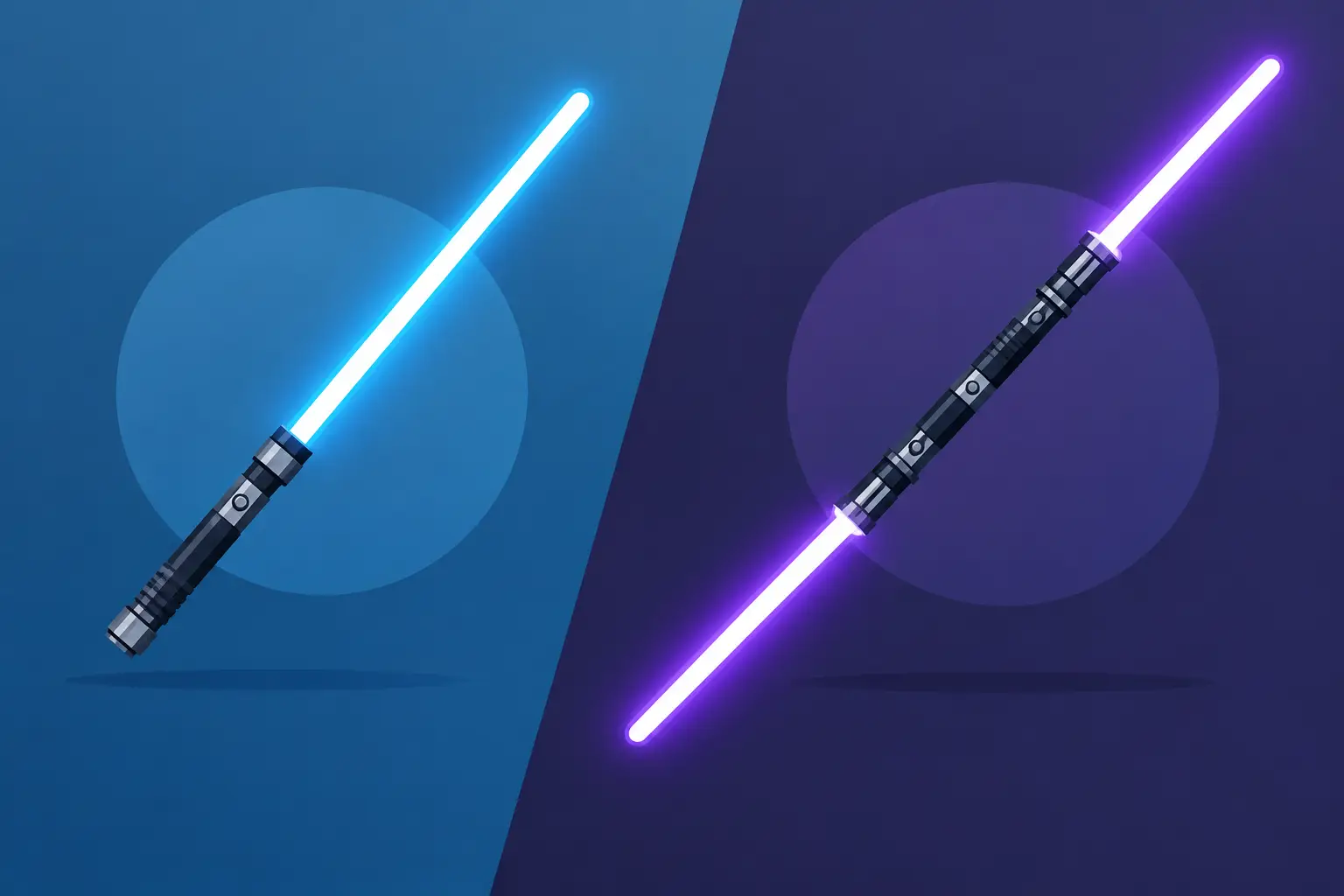
A saber can look perfect on screen and feel completely wrong in your hands. That is the real question behind single versus double bladed sabers: not which one is more impressive, but which one matches how you want to train, cosplay, display, or duel. A double blade brings instant Sith-level presence, while a single blade gives you the familiar control and versatility that make it a favorite for first-time owners and seasoned collectors alike.
Single Versus Double Bladed Sabers at a Glance
A single-bladed saber has one hilt and one blade. It is the classic Jedi, Grey Jedi, or Sith format, and it works naturally for nearly every use case. You can train with it, carry it at a convention, pose for photos, or mount it on display without needing much extra room.
A double-bladed saber uses a longer center hilt with blades extending from both ends. Some setups are built as one dedicated staff, while others use two compatible hilts connected with a coupler. The result is dramatic, intimidating, and unmistakably Sith-inspired, though it asks more from the person holding it.
Neither design is automatically better. The right choice depends on your experience level, your available space, and whether you care most about handling, visual impact, or the option to change your setup later.
Why a Single-Bladed Saber Is the Safer First Choice
For most Younglings, Padawans, and first-time adult buyers, a single-bladed saber is the easiest place to start. The weight is more centralized, the movements are easier to understand, and accidental contact with nearby walls, furniture, or fellow fans is less likely. You get more room to learn distance, grip changes, basic guards, and controlled swings without managing a second blade behind you.
That control matters during recreational dueling. A single saber lets you focus on clean strikes and safe recovery rather than trying to track both ends of a staff. It is also more forgiving when a duel gets close. With a double blade, the end that is not facing your opponent can still clip a shoulder, leg, prop, or spectator if your spacing slips.
Single sabers are also easier to personalize around a specific character identity. A polished Jedi-inspired hilt, an aggressive Sith design, or a weathered Grey Jedi build can stand on its own as a display piece. Blade color, sound fonts, ignition effects, and hilt details tend to get more attention when the silhouette is simple and iconic.
For cosplay, the practical advantage is even clearer. A single saber is easier to belt-carry, transport in a bag, and handle in crowded convention aisles. If your event calls for frequent photos, you can switch from a ready pose to a relaxed stance quickly. It is a small detail, but it makes a long day in costume more enjoyable.
Where a Single Blade Has Limits
The classic setup is flexible, but it does not create the same visual spectacle as a staff. If your goal is a dramatic villain entrance, a high-energy choreographed performance, or a display that immediately commands attention, one blade may feel restrained. A single saber also does not give you the connected two-hilt look that many fans want for a character-inspired collection.
That is not a reason to skip it. It simply means you should choose a single blade because you value its handling, not because it is the only acceptable option.
What Makes Double-Bladed Sabers Different
A double-bladed saber changes the relationship between your hands, your body, and the space around you. The longer hilt creates leverage and can feel stable when held with two hands, but the full setup has more rotational weight. Once both blades are installed, every swing requires awareness from end to end.
That added length is exactly why fans love them. A double blade fills a doorway, dominates a photo, and gives a display collection a powerful centerpiece. For a Sith costume or a dark side-inspired character build, it can deliver an immediate sense of menace that a standard hilt cannot quite match.
It can also be a rewarding training tool for people who enjoy deliberate, staff-based choreography. Spinning transitions, alternating grips, and broad defensive patterns look fantastic when they are performed with control. The key word is control. A double-bladed saber rewards practice, patience, and open space far more than speed for its own sake.
The Trade-Offs of a Saber Staff
The biggest limitation is space. A double-bladed saber is not ideal for a small bedroom, a packed convention floor, or a casual backyard duel with people standing nearby. You need enough clearance above, beside, and behind you before turning it on, especially when using full-length blades.
Transport and storage also take more planning. A staff is longer than a conventional saber, and two blades mean more gear to protect. If you build your staff from connected hilts, you may need to think about blade lengths, coupler compatibility, charging access, and whether you want to use the hilts separately at times.
For full-contact-style recreational dueling, avoid assuming that two blades equal twice the advantage. The staff can be difficult to recover after a missed swing, and the exposed back end creates an extra safety concern. Training with a partner who understands distance and agreed contact rules is much more important than the number of blades in your setup.
Choose by Your Main Use
If you want one saber that can do almost everything, choose a single-bladed model. It is the strongest all-around option for gifting, entry-level training, cosplay, and everyday display. Parents shopping for a younger fan will usually find that a manageable single saber helps build confidence without making handling needlessly complicated.
If your priority is a bold Sith display or an elaborate costume, a double blade may be the right call. It is especially satisfying for fans who already own a standard saber and want a second piece with a completely different personality. The contrast between a clean Jedi-style hilt and a menacing staff can make a collection feel more intentional.
For experienced duelists, the answer depends on your training environment. A durable single saber is generally easier to use in organized sparring. A double-bladed staff makes more sense when you have room to practice patterns safely and enjoy the technical challenge of a less conventional weapon style.
A Flexible Option: Two Hilts and a Connector
You do not always have to commit to one format forever. Two compatible sabers with a connector can give you the option to run separate single blades or join them into one double-bladed staff. This route costs more than buying one hilt, but it offers genuine flexibility for collectors, cosplay teams, or fans whose preferences are still developing.
Before building a connected setup, confirm that the hilts and coupler are designed to work together. Think through the finished length as well. Two long blades on a joined hilt create a striking staff, but shorter blade configurations may be more practical for indoor choreography, photos, or controlled training.
This is also where quality support matters. Saber ownership should be fun, not a guessing game about parts, charging, or setup choices. SaberBros personally inspects sabers before shipment and backs purchases with warranty protection and real customer service, which can make a difference when you are selecting a first saber or planning a multi-piece build.
Handling Tips Before You Choose
A few honest questions can prevent buyer's remorse. Where will you use the saber most often? How much open space do you actually have? Will it spend more time on a wall mount, at a convention, or in your hands during practice? The answer may be different from the saber style you first imagined.
Also consider how the hilt feels rather than focusing only on blade count. A comfortable grip, sensible weight, secure assembly, and the right blade length will affect your experience every time you pick it up. For younger users, keep the setup manageable. For adult collectors, decide whether you prefer screen-inspired elegance, battle-ready presence, or maximum display drama.
Whichever path you choose, start with the saber you will genuinely use and enjoy. A single blade can grow with you from Padawan practice to serious collecting, while a double blade can turn a favorite costume or display into the centerpiece it deserves.