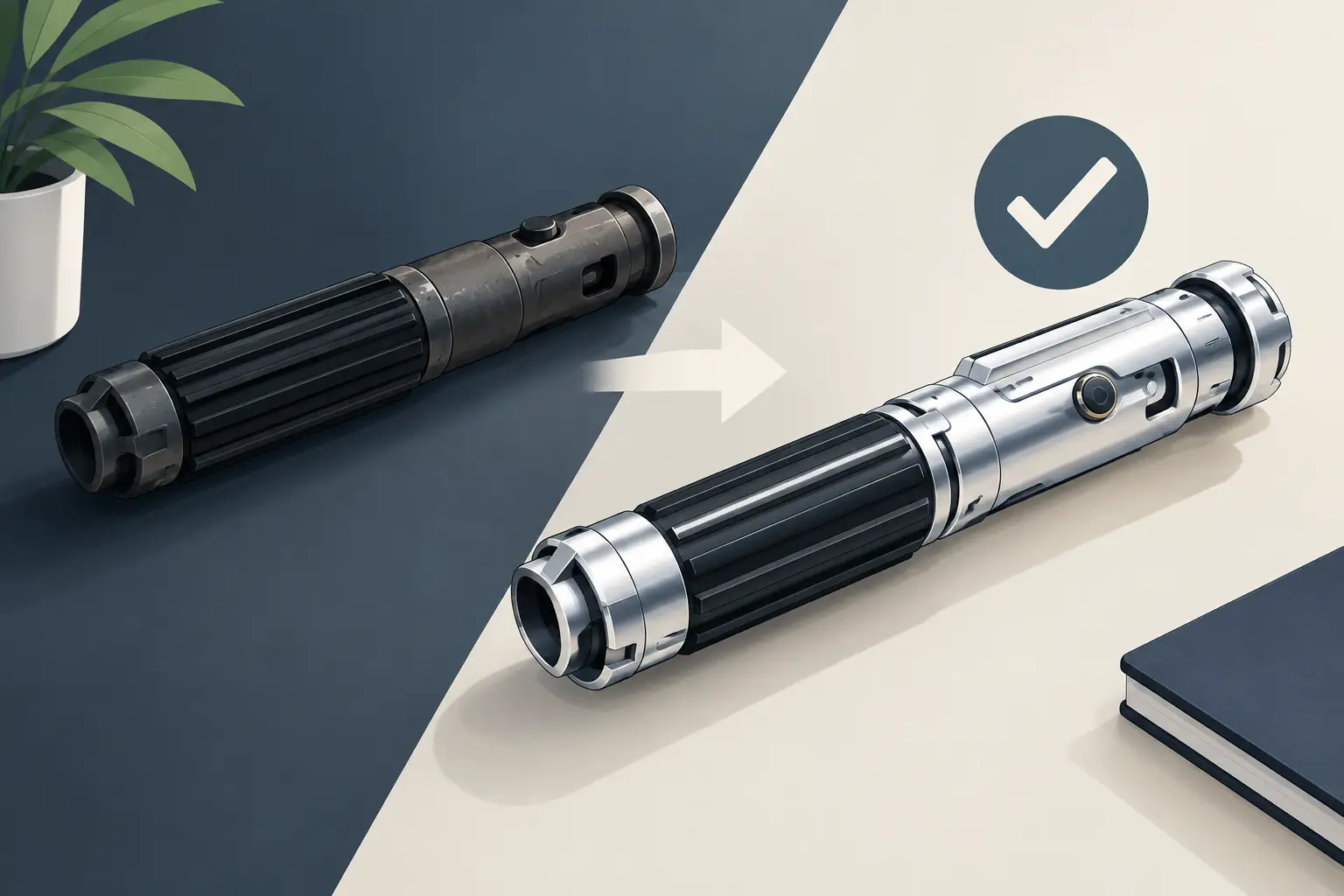
A lightsaber can have a bright blade, crisp sound effects, and every color setting you want, but the hilt is what tells your hands whether it feels like a real piece of gear. This metal hilt review focuses on the part of saber ownership that pictures cannot fully show: weight, balance, grip, construction, and how a hilt holds up when it leaves the display stand.
For many fans, moving from a plastic toy saber to a metal-hilt model is the moment the experience changes. The saber feels less like a prop and more like something a Jedi, Grey Jedi, or Sith would choose for a mission. That upgrade is worth it for plenty of collectors and duelists, but not every metal hilt is automatically the right fit. The details matter.
What a Metal Hilt Changes
Most quality lightsaber hilts use aluminum alloy, typically with machined rather than molded construction. Aluminum offers a strong balance for saber owners because it is substantially more durable than plastic without turning the hilt into an exhausting club. A properly built metal saber can handle regular cosplay, choreography, and recreational dueling while still being comfortable enough for an extended training session.
The biggest improvement is tactile. Machined grooves, emitter shaping, grip sections, switches, and pommels give your hands points of reference. You can feel which direction the blade is facing without looking down. That matters when filming a fight scene, practicing forms, or simply making a dramatic entrance at a convention.
There is also the visual advantage. Metal catches light differently than painted plastic. Brushed aluminum, polished sections, black anodized finishes, and weathered details can give a saber the convincing, lived-in character fans expect from a display piece. A clean silver Jedi build reads differently from a black-and-red Sith hilt before the blade even ignites.
Metal Hilt Review: The Details That Matter Most
A metal body alone does not guarantee a great saber. When comparing options, look past the headline material and consider how the individual parts work together.
Balance is more important than total weight
A heavier hilt may sound more premium, but excess weight near the emitter can make a saber feel front-heavy once a blade is installed. That can tire your wrist during spins and reduce control in dueling. A well-balanced saber places enough weight in the grip and pommel to counter the blade without making the hilt feel sluggish.
Shorter hilts often feel quick and controlled, making them a natural match for younger Padawans, one-handed choreography, or compact character-inspired designs. Longer hilts provide more room for two-handed grips and can feel especially satisfying for adults practicing broader forms. Neither style is universally better. Your height, hand size, blade length, and intended use all affect the right choice.
Grip design should match your use
A collector can prioritize screen-inspired contours and detailed control boxes. A duelist should pay closer attention to usable hand space. Deep grooves and knurled sections can improve traction, while smooth grips are easier to reposition during spinning techniques.
There is a trade-off with highly detailed hilts. Decorative greeblies, raised switches, and sharp-looking emitter claws can make a saber look outstanding on a wall mount, but they may catch on gloves or press into your palm during repeated strikes. If full-contact-style recreational dueling is your priority, choose a cleaner grip with fewer protruding pieces. If the saber is mainly for cosplay or display, those visual details may be exactly what you want.
Finish affects both appearance and upkeep
Bare aluminum has a classic, practical look and can develop small signs of use over time. Some fans enjoy that earned weathering. Black anodized finishes offer a darker, more aggressive Sith or Grey Jedi presence, though hard impacts can eventually reveal marks around edges and high-contact points.
Painted finishes deserve extra care, especially when the saber will be used outside or carried to events. Friction from belt clips, rings, rough surfaces, and repeated blade installation can wear any finish. That is not necessarily a flaw. It is simply part of choosing a saber that will see action rather than live permanently in a display case.
Internal fit is where confidence comes from
The outside of the hilt gets attention, but internal fit determines whether the saber feels secure in use. The blade retention screws should hold the blade firmly without requiring excessive force. Threads between the emitter, body, and pommel should engage smoothly. The chassis holding the electronics should not rattle when you move the saber.
Loose components can create annoying vibration noises, affect the sound experience, or make a saber feel less refined. On a combat-ready model, secure assembly is also a practical safety concern. A hilt should feel like one complete piece, not a collection of attractive parts that happen to screw together.
Who Should Choose a Metal-Hilt Saber?
Metal hilts make sense for most teen and adult fans who want their lightsaber to feel substantial, whether the goal is collecting, cosplay, training, or dueling. They are particularly appealing if you plan to add a blade, carry the saber at events, or display it as a centerpiece rather than keep it boxed.
For a first saber, a straightforward Padawan-style metal hilt is often the smart move. It gives you the feel of aluminum construction without overwhelming you with complex controls or an overly specialized shape. Parents shopping for younger fans may prefer a lighter Youngling option, since a metal hilt with a full-length blade can be difficult for small hands to control safely.
Experienced collectors may care more about silhouette, finish, and feature compatibility. A Jedi-focused build might favor a bright silver profile with classic grips. A Grey Jedi fan may choose a practical, neutral design that can move between different blade colors. Sith collectors often gravitate toward darker finishes, angled emitters, or more aggressive lines. The best choice is the one that matches how you imagine using it, not just which side of the Force you claim.
Is a Metal Hilt Better for Dueling?
For recreational dueling, metal is generally the better hilt material because it offers greater rigidity and a more secure hold. Still, the hilt is only one part of the equation. Blade grade, blade retention, connector tightness, and responsible striking technique all matter.
Do not assume that a heavy, ornate saber is automatically best for combat. In fact, simpler aluminum hilts with comfortable grips are often more enjoyable for frequent use. They are easier to handle, less likely to snag, and more forgiving when you are learning control. Save highly detailed collector designs for choreography, photos, or lighter sparring unless they are specifically built with active use in mind.
A good practice setup also respects the people around you. Check the blade before each session, tighten any retention screws as needed, and use appropriate protective gear when contact is involved. A premium saber deserves care, and so do your training partners.
What to Check When Your Saber Arrives
Before your first activation, inspect the hilt in your hands. Look for clean threads, firm switch placement, secure screws, and a blade that seats evenly. Turn the saber slowly to feel for sharp edges or loose sections. Then test the balance with the blade installed, because the experience can change significantly once the hilt is fully assembled.
This is one reason pre-shipment inspection and accessible support matter when buying a saber online. SaberBros approaches saber ownership as more than a transaction, with personal inspection, warranty protection, and real people available when a question comes up. A metal hilt is built to be handled, so you should not be left guessing if something feels off.
The right metal hilt should make you want to pick up your saber again. Choose one that fits your grip, your plans, and your version of the galaxy, then give it the care needed to become part of your story.