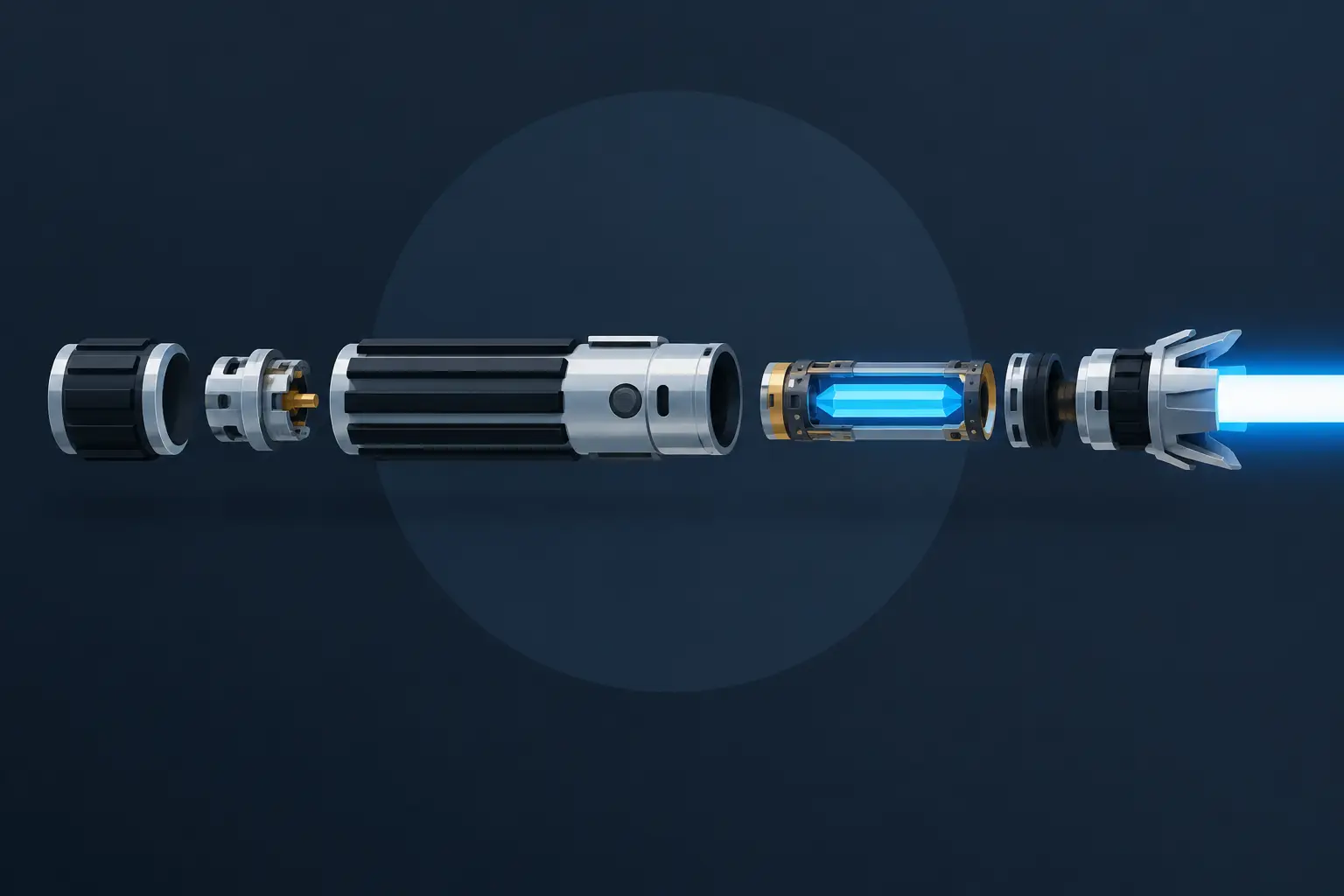
A saber can look perfect on a display stand and still feel disappointing the first time it powers on. That is why the lightsaber chassis matters. Hidden inside the hilt, it gives the battery, soundboard, speaker, and wiring a secure home so your saber can light up, respond to motion, and hold up to the way you plan to use it.
For a first-time Padawan, the chassis may never be something you see. For a collector, cosplayer, or duelist, it can make the difference between a hilt that feels thoughtfully built and one that needs constant adjustment. Here is what is happening inside your saber and what to consider before choosing a build.
What Is a Lightsaber Chassis?
A lightsaber chassis is the internal structure that organizes and supports a saber's electronic components. Think of it as the frame inside the hilt. Rather than allowing the battery, board, speaker, and connectors to shift around in open space, a properly fitted chassis keeps everything in its intended position.
Most chassis systems are built from durable plastic, resin, or other fitted materials designed around a specific hilt interior. The exact layout varies by saber design and electronics package. A slim character-inspired hilt may have very little room to work with, while a larger combat saber can allow a more accessible internal arrangement.
The chassis does not create the blade color or sound effects by itself. Its job is just as valuable: it supports the components that do. A secure internal setup helps protect connections, reduces unwanted rattling, and makes battery access or future servicing less frustrating.
Why the Chassis Matters for Your Saber Experience
When you swing a saber, the hilt absorbs movement. During dueling, it also deals with vibration and impact. Electronics that are loose inside the handle can pull at wiring, strain connector points, or create an annoying rattle that takes away from the experience.
A well-designed chassis helps prevent that movement. It holds the soundboard and battery in place, gives the speaker a stable mounting point, and keeps wires routed away from threads, switches, and other moving parts. This is especially useful for sabers meant for regular handling rather than display-only collecting.
There is a practical side to this, too. If your saber needs a battery removed for charging or a component inspected, an organized interior makes it easier to understand what you are handling. That does not mean every chassis is intended for frequent disassembly. In fact, forcing parts loose can damage a wire or connector. But a purpose-built layout is far better than a crowded hilt with unsecured components.
For buyers comparing saber tiers, remember that a stronger chassis is only one piece of the full build. Blade retention, hilt material, electronics quality, battery capacity, and intended use all matter. The right choice depends on whether you are building a display collection, preparing for cosplay, or stepping into a friendly duel.
What a Saber Chassis Typically Holds
Inside a modern illuminated saber, the chassis often supports several essential parts. The most familiar is the rechargeable battery. It supplies power to the blade LEDs, speaker, and soundboard, so it needs a secure fit and reliable electrical contact.
The soundboard is the control center. It manages ignition, blade effects, sound fonts, volume, motion sensitivity, and other features available with the saber's electronics. Because this board is a small electronic component, it benefits from protection against shifting and unnecessary pressure.
A speaker is also commonly mounted near the pommel end of the hilt. Good placement helps sound travel through the vented sections of the saber instead of becoming muffled inside the handle. Wires and connectors bridge these components together, which is why clean routing matters more than it may appear from the outside.
Higher-featured builds may include additional connectors, accent LEDs, removable core sections, or specialized switch assemblies. More features can add immersion, but they also make a clean internal arrangement more valuable. A saber with advanced effects should still feel dependable when you pick it up.
Fixed Chassis vs. Removable Core Designs
Not every internal setup is built the same way. Some sabers use a chassis that remains inside the hilt, with access to the battery or charging port through a designated section. Others use a removable electronics core, where the major internal components are contained in a single unit that slides out for service or upgrades.
A fixed design can be a great fit for a hilt with limited interior space or a highly specific shape. It keeps the electronics tailored to that saber's dimensions and may preserve a more screen-inspired exterior. The trade-off is that access can be more limited, so it is wise to follow the product instructions rather than treating the hilt like a general-purpose toolkit.
A removable core can be appealing to fans who want easier access to the battery and electronics. It may also make future troubleshooting more straightforward. Still, removable does not always mean universal. Core dimensions, switch positions, speaker setups, and connector layouts differ between hilts. Before planning any upgrade, confirm compatibility with the exact saber configuration.
Choosing a Lightsaber Chassis for How You Will Use It
Start with the job you want your saber to do. A Youngling or Padawan saber for gifting, casual play, and first-time collecting does not need the same priorities as a combat-focused hilt. For a newer fan, easy charging, a comfortable grip, dependable effects, and a supported purchase experience may matter far more than accessing every internal component.
If you are buying for cosplay or display, hilt accuracy and external detailing may lead the decision. The chassis still matters because you want reliable ignition and sound during photos, conventions, or events. Just recognize that a slim, detailed hilt may not have the interior room of a larger dueling model. That is a design trade-off, not automatically a weakness.
For active dueling, look for a saber built with recreational combat in mind. A secure internal structure supports the electronics, but it cannot turn a display hilt into a heavy-dueling weapon. Choose an appropriate blade, make sure the blade is properly retained, and use the saber within its stated purpose. Even a Sith-style hilt deserves a little common sense when the training session gets competitive.
Experienced fans who enjoy changing sound fonts, blade settings, or parts may prefer an electronics package designed for accessible configuration. If customization is your priority, focus on the full system: soundboard capabilities, battery setup, access points, and the availability of compatible upgrades. The chassis is the foundation, but the entire build determines what changes are practical.
Signs of a Secure Internal Build
You do not need to open a saber to notice whether the internal assembly is doing its job. When you carefully handle the hilt, it should feel intentional rather than loose or noisy. A little sound from moving buttons or a removable battery mechanism can be normal, but unexplained rattling is worth checking.
Pay attention to power consistency as well. A saber that cuts out when moved, loses sound unexpectedly, or only activates at a certain angle may have a battery, connection, or electronics issue. Do not keep shaking or striking the hilt to test it. Power it down, inspect the accessible battery area if applicable, and contact customer support for help.
At SaberBros, personal pre-shipment inspection is part of helping customers receive a saber ready for its intended adventure. That extra attention matters because a saber is more than a prop in a box. It is a piece of fandom gear you should feel comfortable turning on, carrying, and showing off.
Care Tips That Protect the Chassis
The simplest protection is also the most effective: avoid opening the hilt unless you need to access a designated battery compartment, charging port, or removable core. Internal wires are compact by necessity, and pulling on an assembly can create problems that were not there before.
Keep the saber dry, store it away from extreme heat, and use the correct charger and battery type for its electronics. When changing a battery, follow polarity markings carefully. If a threaded hilt section needs to be opened, turn it gently and keep an eye out for wires that may run between sections.
For dueling, make sure the blade is seated fully and secured according to the hilt's retention system before every session. The chassis protects the electronics inside the handle, while proper blade installation protects the saber as a whole. Those small checks help you spend more time training like a Jedi, embracing your Grey Jedi balance, or choosing the Sith path, and less time troubleshooting.
The best chassis is not necessarily the one with the most complicated layout. It is the one that supports your chosen hilt, protects the electronics you rely on, and lets your saber feel ready every time you bring it to life.