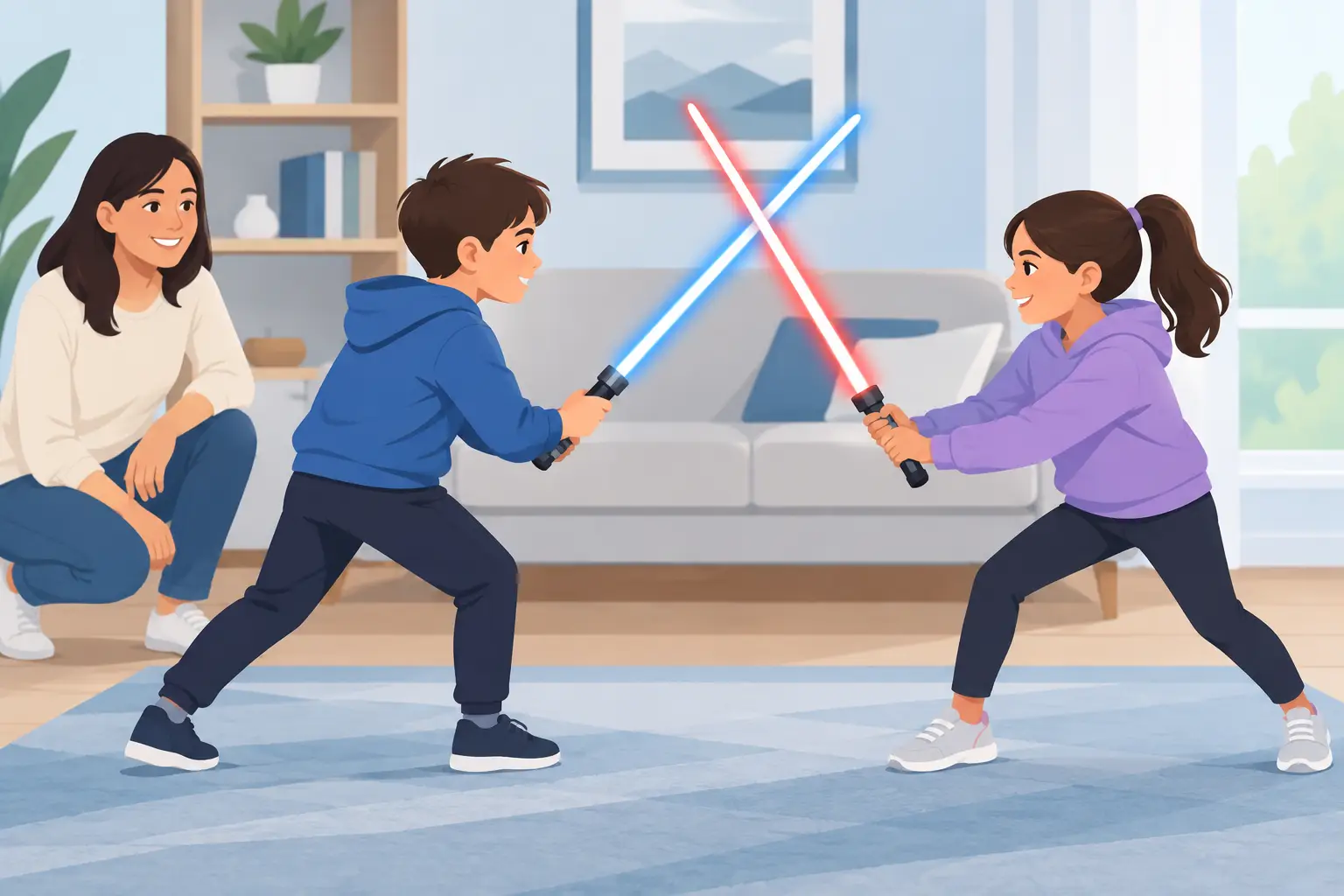
A glowing saber can turn a living room into a galactic showdown in seconds. But can kids duel safely? Yes, when the saber, space, rules, and level of adult supervision all match the child. The goal is not to remove the fun. It is to give Younglings and Padawans a way to play confidently without treating a saber battle like an unplanned free-for-all.
A lightsaber is not automatically safe or unsafe because it lights up. Its safety depends on how it is built, how it is used, and who is holding it. A six-year-old gently tapping foam pool noodles has very different needs from a teenager practicing choreographed sparring with friends. Parents should choose the setup before the battle starts.
Start With the Right Saber for the Child
The first safety decision happens before the first ignition. A saber made for display, cosplay, or light motion is not necessarily designed for repeated blade contact. A combat-ready saber may be more durable, but durability does not make it appropriate for every age or every style of play.
For younger children, prioritize a lighter hilt, a manageable blade length, and a setup they can control with two hands. A blade that is too long can catch furniture, doorframes, or another child who is standing farther away than expected. A hilt that feels heavy after a few minutes can lead to wild swings as a child tries to compensate.
Padawan-level players generally do best with simple, comfortable sabers rather than feature-heavy builds that add weight or distraction. Bright colors and sound effects are part of the magic, but a child still needs to understand where the blade ends and how much room a swing requires. If they cannot comfortably hold the saber level with both hands, it is probably not the right dueling setup yet.
For older kids and teens, a sturdier combat saber can make sense if they are ready to follow rules and practice control. Look at the complete setup, not just the label. Blade material, blade thickness, hilt grip, balance, and intended use all matter. When shopping with a family dueling plan in mind, ask whether the model is intended for contact and what kind of contact it can reasonably handle.
Can Kids Duel Safely With Combat Sabers?
They can, but only with controlled contact. “Combat-ready” describes the saber’s construction, not permission to swing at full power. Children should never interpret a durable blade as an invitation to hit harder, target the body, or keep going when someone is uncomfortable.
A useful rule is this: the saber should meet the other blade, not the other person. Teach kids to aim for blade-to-blade contact at the middle or upper half of each blade, away from hands. This creates a visible target and reduces the urge to chase a moving opponent.
Young children should begin with touch-contact dueling. That means gentle taps, slow motions, and short rounds. Older children who have shown consistent control can progress to light sparring, where contact is still deliberate rather than forceful. Full-power striking is not appropriate for children, especially in homes, crowded yards, or casual birthday-party play.
Even siblings who usually play well together may need a reset when excitement takes over. If swings get faster, voices get louder, or either player starts backing away instead of engaging, pause the session. A quick water break is far better than waiting for a bumped knuckle or accidental hit to end the fun.
Create a Dueling Space Before Ignition
The safest saber is still risky in a cramped room with coffee tables, lamps, pets, and spectators. Clear a dedicated area before the blades come out. A driveway, open basement, backyard, or cleared playroom can work well, as long as the surface is stable and everyone has enough room to step back.
Give each duelist a personal bubble. A practical starting point is enough space for both players to extend their sabers and take two steps in any direction without hitting a wall, piece of furniture, or bystander. If the space cannot support that distance, switch to solo drills or a non-contact choreography session.
Keep pets and younger siblings outside the dueling area. Their movements are unpredictable, and a child focused on an opponent may not notice someone entering from the side. The same goes for loose rugs, wet grass, clutter, and uneven ground. A dramatic spin is much less impressive when it ends in a slip.
Set Rules Kids Can Actually Remember
Long lectures disappear the moment the ignition sound starts. Use a small set of rules, repeat them before every duel, and enforce them consistently. For family play, four rules are usually enough:
- Blades only - no hitting hands, heads, bodies, or legs.
- Gentle contact - no baseball-bat swings or overhead chops.
- Stop means stop - either player can call a pause immediately.
- Keep the battle in the marked space.
You can make the rules feel more like part of the adventure. Call the pause command “sabers down,” and require both players to point their blades toward the floor as soon as they hear it. This is easier for kids to remember than a vague instruction to “be careful.”
It also helps to set a win condition that does not encourage rough play. Try three clean blade taps, a short choreographed sequence, or a timed round where players earn points for control and footwork. Avoid games where the goal is to disarm someone by force or strike an opponent’s body. Those formats reward the exact behavior you want to prevent.
Protective Gear Is a Smart Upgrade
For gentle, supervised play with younger children, protective gear may be optional if the rules are followed and contact stays light. For older kids practicing more active sparring, basic protection is a sensible part of the setup.
Eye protection is the first priority. Sports goggles or a properly fitted fencing-style mask can protect against an unexpected blade tip or a poorly timed swing. Closed-toe shoes help outdoors, while gloves can reduce sore knuckles during repeated blade contact. Long sleeves and forearm guards may be worthwhile for teens who are practicing longer sessions.
Do not use oversized gear as a substitute for good behavior. A helmet does not make head strikes acceptable, and thick padding does not make uncontrolled power safe. Equipment adds a layer of protection. Clear limits and active supervision do the heavier work.
Teach Control Before Sparring
A few simple drills can build better habits than jumping straight into a duel. Start with stance: feet shoulder-width apart, knees relaxed, and both hands on the hilt when possible. Then have the child practice stopping the blade in front of a target without touching it. A rolled-up towel, a taped line on a wall-free surface, or a cardboard target held securely at a safe distance can help them learn reach and braking control.
Next, practice slow parries. One person makes a gentle, predictable blade movement while the other meets it with their blade. The focus should be accuracy, not speed. When kids can make consistent blade-to-blade contact at low speed, they are more likely to stay composed during a real round.
Choreography is another excellent option. A simple sequence of block, tap, step back, and reset gives kids the feeling of a cinematic duel while keeping every motion planned. It is also a great choice for children who love cosplay and storytelling more than competition.
Supervision, Age, and Temperament Matter
There is no single age when every child is ready to duel. Coordination, impulse control, and willingness to stop all matter more than a birthday number. Some younger fans can handle gentle, structured play well. Some older kids need more practice before they are ready for contact sparring.
An adult should remain close for younger children and for any first few sessions with a new saber. Supervision is not just watching from across the room. It means checking the play area, reviewing the rules, noticing fatigue, and stepping in early when the energy shifts.
Be willing to say that a child is ready for solo practice but not yet ready to duel another person. That is not a punishment. It is the normal path toward better control. A child who learns to stop, reset, and respect boundaries is building the skills that make future duels safer and more enjoyable.
Inspect the Saber Before Each Session
Take a minute to check the blade and hilt before play. Make sure the blade is secure, the retention screws are properly tightened, and there are no cracks, sharp edges, or loose components. A damaged blade should not be used for contact, even if the saber still lights up and sounds normal.
Battery condition matters too. If a rechargeable saber behaves inconsistently, shuts off unexpectedly, or has a damaged charging port, take it out of play until it is addressed. Never let children charge or disassemble electronics without the level of help the product instructions call for.
Choosing a saber from a retailer that inspects products and stands behind warranty support can give parents added confidence, especially for a child’s first saber. SaberBros approaches that experience with personal inspection and real customer service, but every family should still check its gear before each duel.
A safe saber battle should end with kids smiling, catching their breath, and already planning the next scene. Keep the rules simple, match the saber to the player, and let good control be the real mark of a rising Jedi.