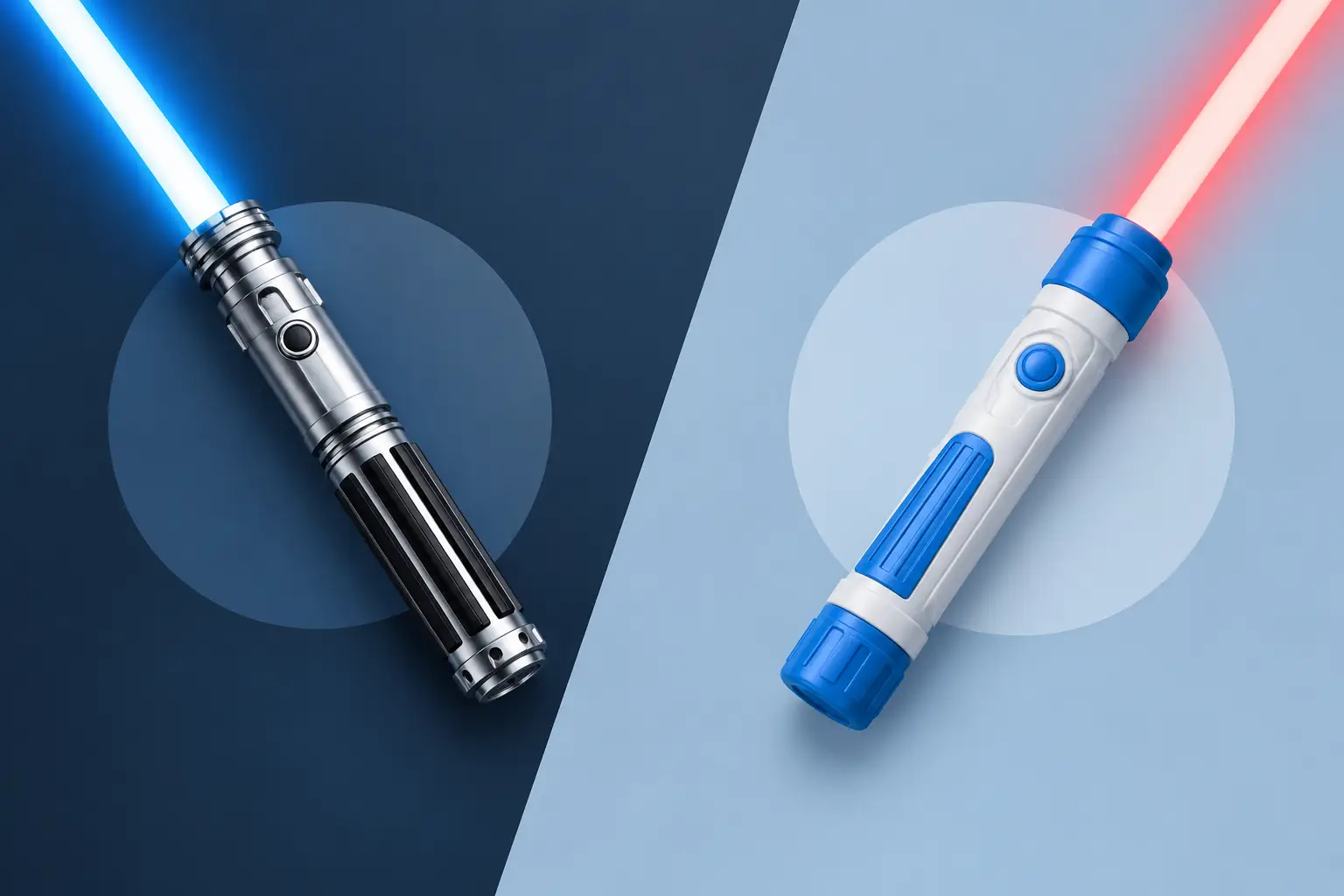
A lightsaber can look incredible in a product photo and still be the wrong choice for the way you plan to use it. When shoppers compare aluminum versus plastic lightsabers, the real question is usually bigger than material alone: Is this a first saber for a Youngling, a cosplay centerpiece, a shelf collectible, or a saber meant to meet another blade?
The first detail to clear up is that many premium sabers are not entirely aluminum. A common combat-ready setup uses an aluminum-alloy hilt with a polycarbonate blade. That distinction matters. Aluminum is prized for the handle because it brings a solid feel and dependable strength, while polycarbonate is a type of plastic chosen for the blade because it can handle impacts far better than a decorative acrylic tube or toy-grade plastic.
Aluminum Versus Plastic Lightsabers: The Real Difference
A plastic lightsaber can mean several different things. It may be a lightweight toy with a molded plastic hilt and fixed blade. It may be a costume saber with a plastic handle and a removable blade intended for poses rather than contact. Or it may refer to a premium saber with a polycarbonate blade, even though the hilt itself is metal.
That is why material labels alone can be misleading. If your goal is dueling, look at the complete build: the hilt material, blade wall thickness, blade retention, internal chassis, and the maker's intended use. A metal hilt does not automatically make every saber suitable for full-contact play, just as a polycarbonate blade does not make a toy hilt competition-ready.
For most teens and adults who want an authentic hand feel, an aluminum hilt is the clear upgrade. It has weight, texture, threaded sections, and the kind of construction that makes activating the saber feel more like wielding a prop than holding a toy. Plastic hilts have a place, especially for younger fans and casual costumes, but they rarely offer the same long-term feel or repairability.
Choose Aluminum for a Saber You Will Use Often
An aluminum hilt is built for the fan who expects more from their saber. It tends to feel balanced in the hand, particularly when paired with a removable blade, and it can support the details collectors care about: machined grips, emitter windows, control boxes, pommels, and weathered or polished finishes.
For dueling, aluminum is the practical choice because the hilt needs to stay stable when the blade takes repeated motion and contact. A well-built metal hilt is less likely to flex, split at a seam, or leave you worrying about a dropped saber. It is also the better platform for advanced features such as brighter blade systems, soundboards, removable batteries, and upgrade components.
That does not mean every aluminum saber should be treated like a training weapon. Long, hard strikes can stress blade retention screws, electronics, connectors, and decorative control pieces. A thin-neck design inspired by an elegant Jedi hilt may be perfect for display and cosplay but less forgiving than a simpler, thicker combat build. Sith-style hilts with claws, shrouds, and dramatic emitters can also look amazing while being less comfortable for fast sparring.
If dueling is your priority, choose a saber with a clean grip area, secure blade retention, and a blade rated for the level of contact you have in mind. A less ornate hilt often becomes the better fighter.
The trade-off: weight and wear
Aluminum has a more premium feel, but it is heavier than plastic. That is usually a benefit for adult collectors and cosplay, yet a smaller child may tire quickly during long play sessions. Metal can also show scratches, dents, and finish wear. Many fans see those marks as earned character. Others prefer to keep a display saber pristine.
An aluminum hilt also deserves basic care. Keep threads clean, avoid overtightening parts, remove the battery for long storage when recommended, and make sure the blade is properly secured before swinging. Those small habits protect both the saber and the person using it.
When a Plastic Lightsaber Is the Better Call
Plastic is not automatically the lesser choice. For a Youngling who wants to recreate a favorite scene in the backyard, a lightweight plastic saber can be safer, easier to control, and much less intimidating than a metal-hilt model. It is also a sensible option for party favors, very young children, or a costume that only needs to look good for a few photos.
A lighter saber reduces fatigue and makes accidental bumps less severe. It can be a smart first step for a child who is still learning safe play rules: keep distance, avoid faces and hands, and never swing near fragile objects. Parents should still match the saber to the child's age and supervise active play.
Plastic hilts are also often less expensive. If the goal is casual fun rather than a long-term collectible, that lower entry cost can be exactly right. There is no need to buy a fully featured metal saber for someone who simply wants to wear robes on Halloween and ignite a blue blade once or twice.
The limits appear when expectations rise. Molded plastic grips can feel less secure, seams may become weak points, and fixed toy blades usually cannot be replaced or upgraded. Electronics are often simpler as well, with fewer sound options, less convincing brightness, and little room for maintenance. Once a fan starts wanting a saber that feels like their own Jedi, Grey Jedi, or Sith build, plastic can begin to feel restrictive.
Do Not Confuse a Polycarbonate Blade With a Toy Blade
This is the point that saves many buyers from choosing the wrong saber. Polycarbonate is plastic, but it is not the same thing as the thin, brittle plastic commonly used in low-cost toy blades. It is a durable material used in premium saber blades because it combines light transmission with impact resistance.
A quality combat saber may therefore be described as having a plastic blade, and that is completely normal. The blade needs to be lighter than metal, bright enough for illumination, and able to flex slightly under appropriate contact. What matters is whether it is designed for dueling and paired with a secure metal hilt.
If a listing only says “plastic lightsaber,” ask a few practical questions before buying. Is the blade removable? What material is the hilt? Is the blade meant for light choreographed contact, medium sparring, or display only? Can the battery, blade, or sound components be serviced later? Clear answers are a good sign that you are buying for the right purpose.
Match the Build to Your Side of the Force
A first-time buyer does not need to start with the heaviest or most complex option. A Padawan-style saber with an aluminum hilt and a manageable blade length offers a strong middle ground for teens and adults: substantial enough to feel special, straightforward enough to learn, and versatile enough for cosplay, display, and careful dueling.
Collectors may lean toward detailed aluminum hilts that match a favorite character-inspired silhouette. In that case, appearance can take priority over sparring comfort. Choose the design you will be happy to see on a stand every day, then treat it according to its intended use.
For regular dueling, favor function. A balanced Grey Jedi-style build, a simple Jedi training hilt, or an aggressive but uncluttered Sith saber can give you a more reliable grip than a heavily decorated replica. The best dueling saber is not always the one with the most dramatic emitter. It is the one you can hold confidently and safely through repeated sessions.
For a gift, think about the recipient before the faction. A lightweight plastic saber may create the biggest smile for a small Youngling. An aluminum-hilt saber with sound and a bright blade may become the unforgettable gift for a teen, adult fan, or collector. Budget matters, but so does the feeling you want the gift to create six months later.
What to Check Before You Commit
Before choosing between aluminum and plastic, decide whether the saber's main job is play, display, cosplay, or dueling. Then examine the construction details rather than relying on a single material word. Look for a hilt that fits the user's hand, a blade appropriate for the intended contact level, accessible charging or battery options, and a design without sharp or awkward features where you plan to grip.
It also pays to buy from a seller that stands behind the build. A saber is electronics, hardware, and fandom all in one package, so support matters when you have questions about setup, blade installation, or care. SaberBros personally inspects sabers before shipment and backs purchases with warranty protection and real customer support, which helps take some of the uncertainty out of choosing your first build or your next upgrade.
Your right material choice is the one that supports the story you want to tell with the saber. Pick plastic when light, simple, kid-friendly fun is the mission. Pick an aluminum hilt when you want a lasting piece of gear that can grow from a first ignition into cosplay, collecting, and carefully chosen duels.